
Waterfalls are one of nature’s most beautiful creations, attracting people from all over the world. Some are famous for their height, others for the sound of rushing water, and some for the magical scenes they create with sunlight and mist. These natural wonders often become a place of peace, adventure, and photography, leaving visitors amazed by the harmony of water, rocks, and light.
Which Waterfall is known as the Rainbow Waterfall?
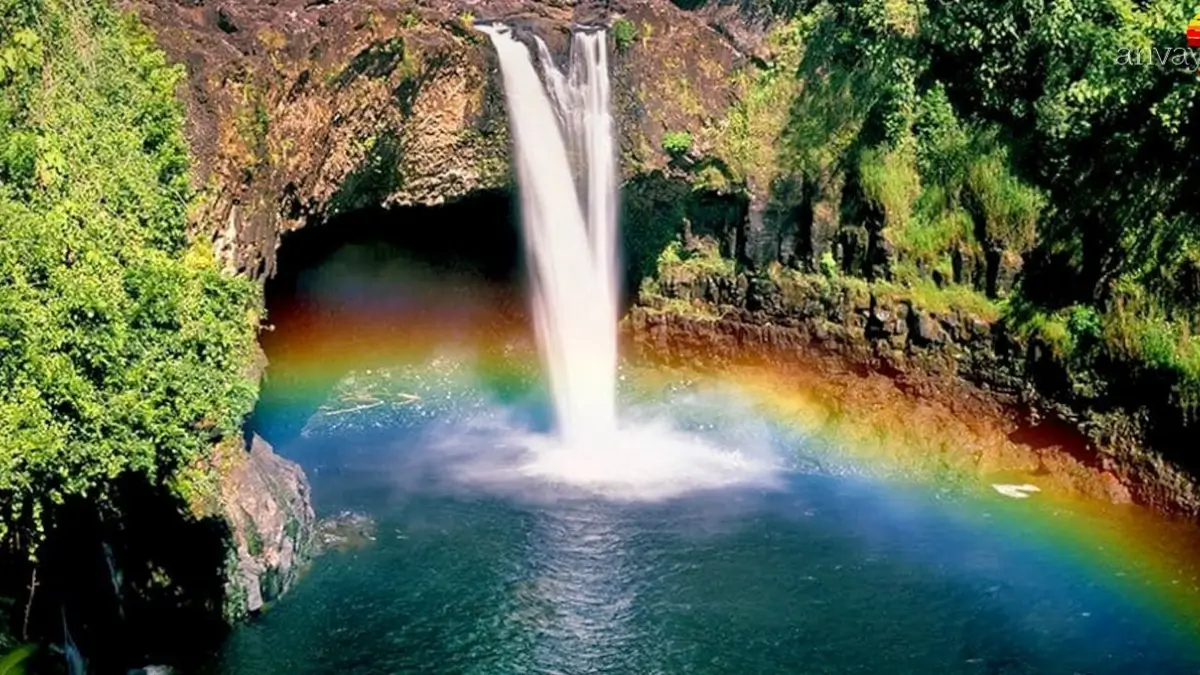
The Rainbow Waterfall, also known as Rainbow Falls, is located near Hilo on the Big Island of Hawaii, USA. It gets its name because a bright rainbow often appears in the spray of water when sunlight hits it at the right angle. The waterfall is about 80 feet tall, and its continuous flow creates the perfect mist for these natural rainbows.
Where is Rainbow Waterfall Located?
Rainbow Falls is inside Wailuku River State Park in Hilo, Hawaii. The area is surrounded by tropical plants, volcanic rocks, and the flowing Wailuku River. These features make it a favourite place for tourists, photographers, and nature lovers who want to enjoy Hawaii’s scenic beauty.
Why is it Called the Rainbow Waterfall?
The waterfall gets its name from the natural rainbows that appear in the mist. In the early morning, when sunlight passes through the water spray, a colourful arc forms. This regular rainbow display is what makes the waterfall famous worldwide.
Meaning of the Name Waiānuenue
In the Hawaiian language, Rainbow Falls is called Waiānuenue, which means “rainbow water.” The name perfectly matches the natural beauty of the place because the mist rising from the waterfall often forms bright and colorful rainbows when sunlight hits it, usually around 10 a.m. on sunny days.
Natural Beauty Around the Falls
The waterfall drops into a large pool created by the Wailuku River. The surrounding gorge is covered with thick, green rainforest plants. Many of these plants, such as wild ginger and monstera, are nonnative but add to the lush, tropical scenery. The turquoise-colored pool and soft mist make the area peaceful and refreshing.
A Place of Hawaiian Legends
Rainbow Falls is not only beautiful but also culturally important. The waterfall flows over a natural lava cave, which is believed in Hawaiian mythology to be the home of Hina, an ancient Hawaiian goddess. This gives the place a deep spiritual and cultural meaning for local people.
Height and Flow of the Waterfall
Rainbow Falls drops about 80 feet into a large pool below. The waterfall is surrounded by lava caves and thick greenery. Its steady flow throughout the year makes it a reliable and beautiful place to visit in any season.
Visiting Rainbow Falls
Visitors can enjoy the view from the easily accessible platform inside the park. Since there is no entrance fee, it is a popular stop for tourists. Early morning is the best time to visit if you want to see the famous rainbow effect in the mist.
Why Rainbow Falls is Famous?
Rainbow Falls is loved for its natural rainbows, cultural legends, lush scenery, and easy access. It is peaceful, photogenic, and full of Hawaiian history, making it one of the must-see waterfalls in Hawaii.
Interesting Facts About Rainbow Waterfall
- Lava Cave Behind the Falls: A natural lava cave lies behind the waterfall. Hawaiian legends say that Hina, mother of the demigod Maui, once lived in this cave. This adds cultural importance to the site.
- Easy to Visit: Rainbow Falls is very close to downtown Hilo. Visitors can reach the viewpoint in just a few steps from the parking area, making it one of the easiest waterfalls to access on the Big Island.
- Changes After Rain: After heavy rains, the waterfall becomes wider and louder. The extra water creates more mist, and sometimes multiple rainbows appear, making it a favourite spot for photographers.
- Fed by Hawaii’s Longest River: The waterfall is supplied by the Wailuku River, Hawaii’s longest river. This ensures that the waterfall keeps flowing, even during dry months.
- Surrounded by Tropical Plants: The area around the waterfall is filled with banyan trees, ferns, and dense tropical plants. This greenery makes it look like a natural rainforest, perfect for nature photography and sightseeing.